
If you are planning a bulkhead project in Washington, the answer is usually yes: most bulkhead construction, replacement, or repair work will require permits. Projects near or below the Ordinary High Water Mark often trigger additional review because shoreline work is closely regulated to protect habitat, public access, and water quality.
Quick answer
Yes — in most cases, bulkhead construction or repair in Washington requires permits, especially when the work is within shoreline jurisdiction or near the Ordinary High Water Mark. If the proper permits are not secured, the project can face shutdowns, fines, or even mandatory removal of completed work.
Why bulkheads are regulated
Washington’s shoreline rules are in place to protect fish habitat, preserve natural shoreline function, and limit unnecessary hard armoring. Because bulkheads can change wave movement, erosion patterns, and shoreline behavior, regulators review them carefully.
That does not mean bulkheads are prohibited. It does mean the project has to be justified, designed correctly, and matched to site conditions.
Permits you may need
Hydraulic Project Approval
A Hydraulic Project Approval, or HPA, is issued by the Washington Department of Fish and Wildlife for work affecting state waters. This permit is commonly required when construction occurs below the Ordinary High Water Mark.
Shoreline substantial development permit
A shoreline substantial development permit is typically issued by the local city or county. It is generally required for development in shoreline areas or within shoreline jurisdiction unless the project qualifies for an exemption.
SEPA review
Some projects also require State Environmental Policy Act review, which evaluates environmental impacts and possible mitigation measures. The level of review depends on the scope of the project and the local permitting process.
Repair vs. replacement
Permitting is often simpler for repairs than for new bulkheads, but the details matter. A minor repair may be treated differently than a full replacement or expansion of an existing structure.
That is important because regulators generally favor maintenance of existing authorized structures over new shoreline armoring. If the work changes the footprint, height, or location of the bulkhead, the review process can become more involved.
Soft shoreline alternatives
In many cases, agencies encourage soft shoreline stabilization before approving a traditional bulkhead. These alternatives can include native vegetation, log structures, or other approaches that stabilize the shoreline while allowing more natural shoreline processes.
Soft shoreline methods are not the right answer for every property, but they are often part of the discussion during permitting. In some shoreline designations, the local rules may even make hard armoring more difficult to approve.
Why applications get delayed
Bulkhead permits are often slowed down by avoidable issues. Common problems include incomplete applications, weak engineering justification, and lack of mitigation planning.
Projects may also stall if the design does not fit the site’s wave conditions or if the applicant cannot show why the bulkhead is necessary. The stronger the documentation, the better the chance of a smoother review.
Why contractor experience matters
Bulkhead projects are regulatory and construction projects at the same time. That means the contractor needs to understand both shoreline building and permit coordination.
Brumfield Construction brings permitting coordination, agency communication, and shoreline protection expertise to help support long-term shoreline performance.
Material selection matters
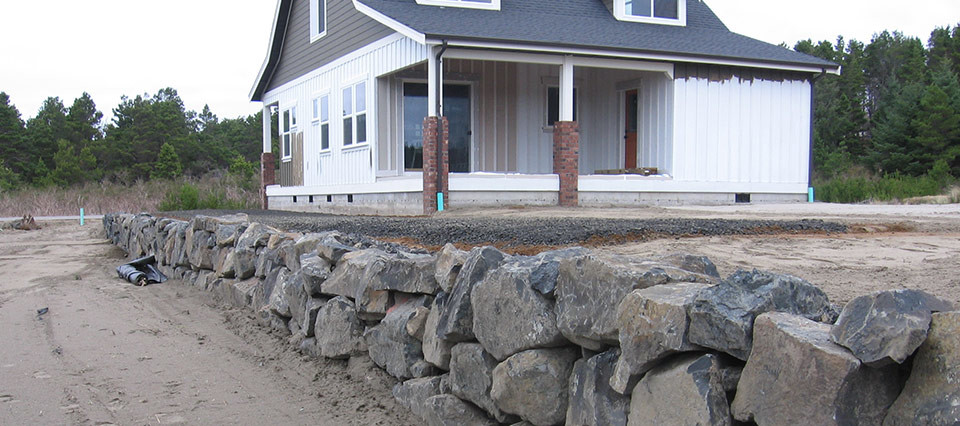
The materials used in a bulkhead can affect both performance and how the project is engineered. Rock and other shoreline materials need to be sized and placed correctly to handle wave action and support the system over time.
We use high-density rock from our own quarries to support stable, durable shoreline construction. That helps keep material quality consistent and aligned with project requirements.
How long permits take
Permit timelines can vary widely depending on the scope of work and the local jurisdiction. Minor repairs may move through the process in several weeks, while new bulkheads can take several months or longer.
Starting early is one of the best ways to avoid delays. If a shoreline project is time-sensitive, the permitting process should begin well before construction is scheduled to start.
Protect your timeline
A bulkhead project can lose months if permits are handled late or incorrectly. Working with an experienced contractor helps reduce that risk by keeping compliance, design, and construction aligned from the beginning.
Contact Brumfield Construction to start your bulkhead project with the right plan, the right materials, and the right permits.
FAQ
Do all bulkheads in Washington need permits?
Most bulkhead projects do, especially when the work is near the Ordinary High Water Mark or within shoreline jurisdiction.
What is the OHWM?
The Ordinary High Water Mark is the legal shoreline reference used to determine whether a project is within regulated water-adjacent areas.
Is a repair easier to permit than a new bulkhead?
Usually yes, but it depends on whether the work changes the structure’s size, location, or function.
Are soft shoreline options easier to approve?
Often, yes. Regulators frequently encourage softer alternatives when they can meet the site’s protection needs.
How long does bulkhead permitting take?
Minor repairs may take several weeks, while new bulkheads can take several months or more.
 Skip to content