
Restoration Projects
Trusted Restoration Project Management
Environmental restoration projects reconstruct our natural environments. At Brumfield Construction through careful planning, coordination, and material selection we restore habitats that are damaged or at risk. Environmental remediation projects restore environments that have been damaged by erosion, flooding and sea level rise.
Fish Passage and Stream Enhancement

Satsop RM 0-2 Phase 2
The problem:
Over the years, the Satsop River has experienced significant ecological degradation due to various land use changes. These include the harvesting of old-growth forests, the removal of historic log jams, and poorly executed erosion control measures such as channel manipulation and hard bank armoring. Collectively, these actions have led to the loss of stable large wood in the river, decreased natural wood recruitment, the spread of invasive plant species, and an overall simplification of the river system.
As a result of this long-term simplification, the river has become increasingly disconnected from its floodplain, making it more prone to rapid erosion across the valley. This heightens the risk of flood damage and poses growing threats to surrounding agricultural lands, homes, and infrastructure. Furthermore, the loss of complexity in the river system has severely diminished the quantity and quality of salmon habitat. Salmon depend on diverse, dynamic river environments with abundant large wood and off-channel features to thrive.
Work Needed:
- 2 miles of river restoration
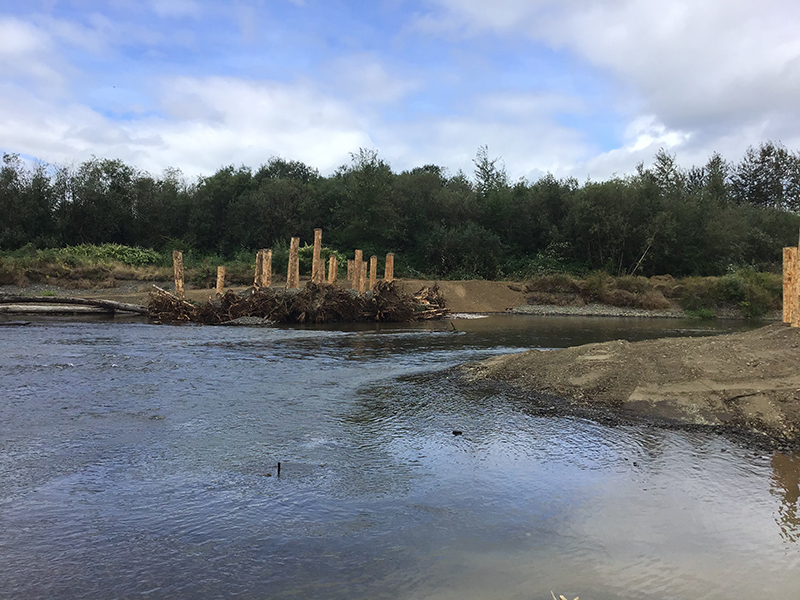
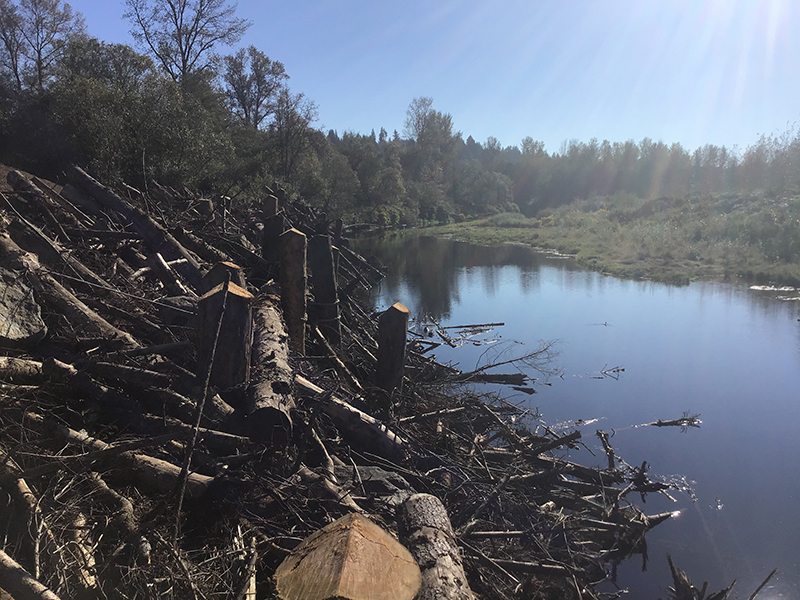
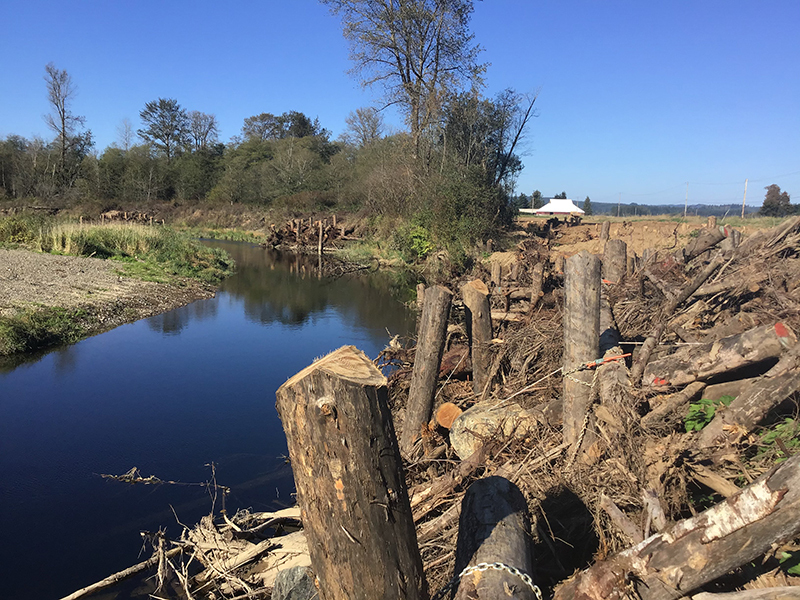
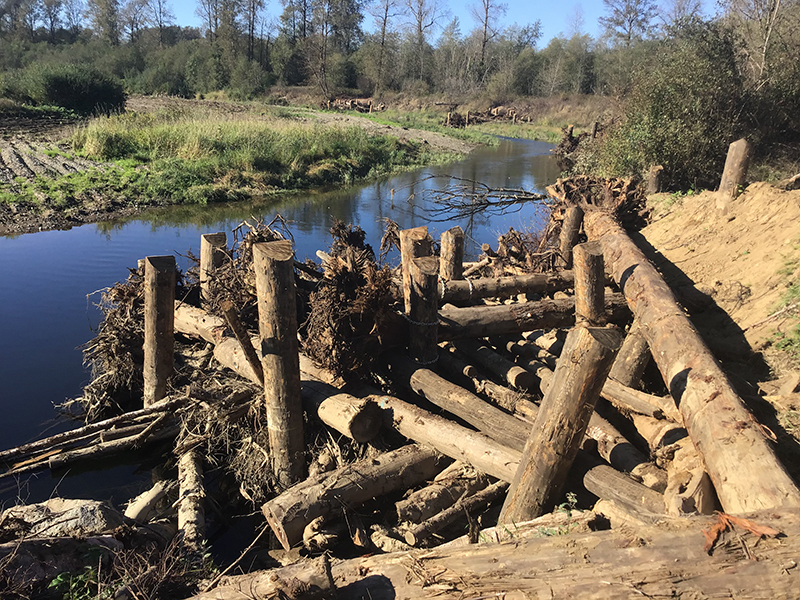
- 46 ELJ (Engineered Log Jams)
- 374 Acres of riparian enhancement, which includes conifer underplanting & invasive species.
- 248 Acres of riparian buffer establishment, riparian plantings and invasive species treatment
Benefits of said project
Long-Term Outcomes:
- Improved floodplain connectivity
- Reduced channel migration, allowing riparian forests to establish and mature
- Significant increase in stable large wood throughout the river reach
- Development of multiple, dynamic river channels
- Increased shade and canopy cover from riparian vegetation
Near-Term Outcomes:
- Marked improvement in both the quantity and quality of fish habitat, driven by enhanced pool formation, side channel connectivity, large wood structures, and strengthened food web dynamics
- Reduced bank erosion through engineered log jams (ELJs) and riparian plantings, decreasing the risk to adjacent farmland, residential areas, and downstream infrastructure from rapid channel migration
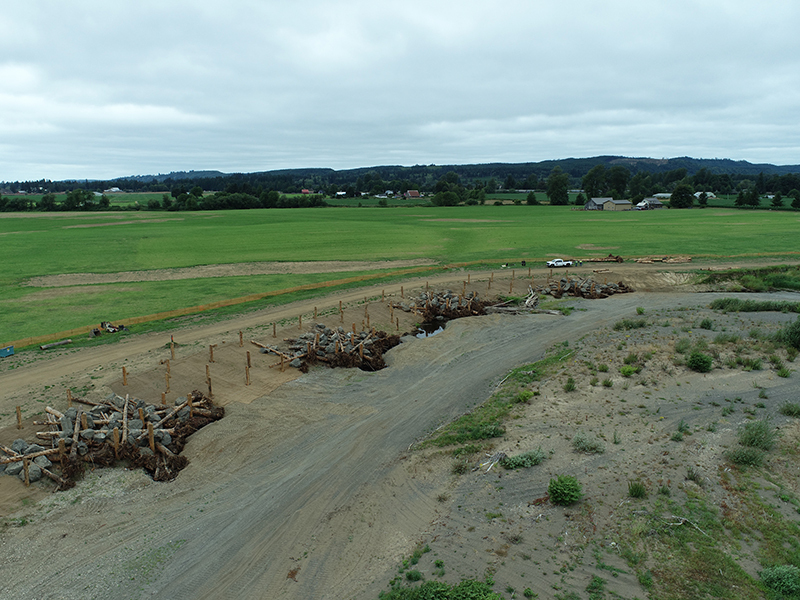

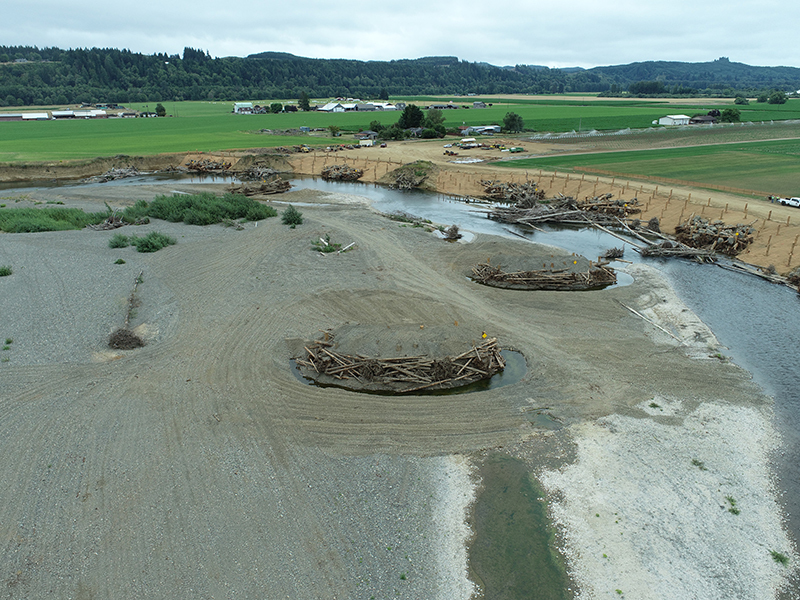
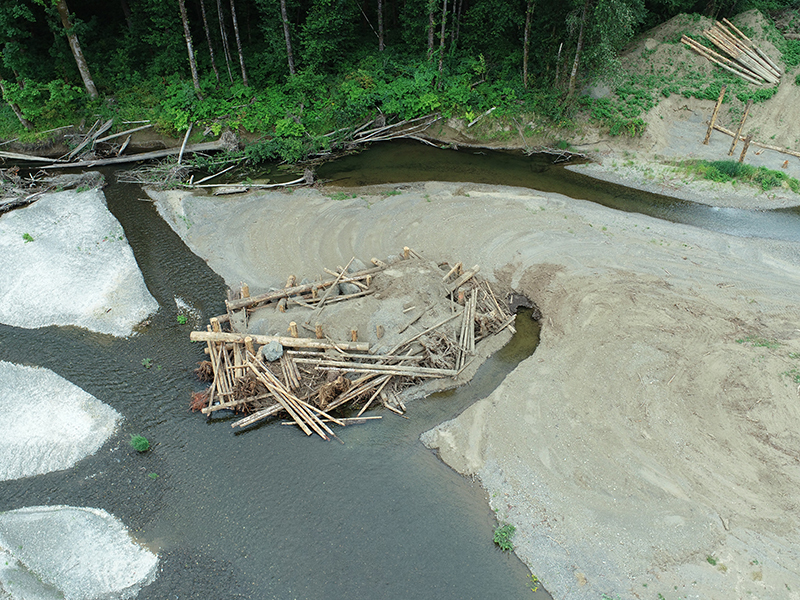

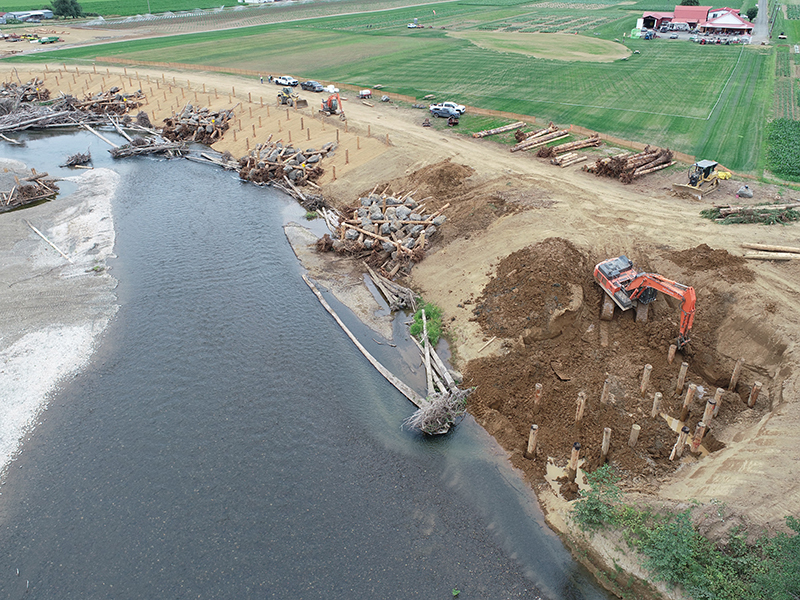
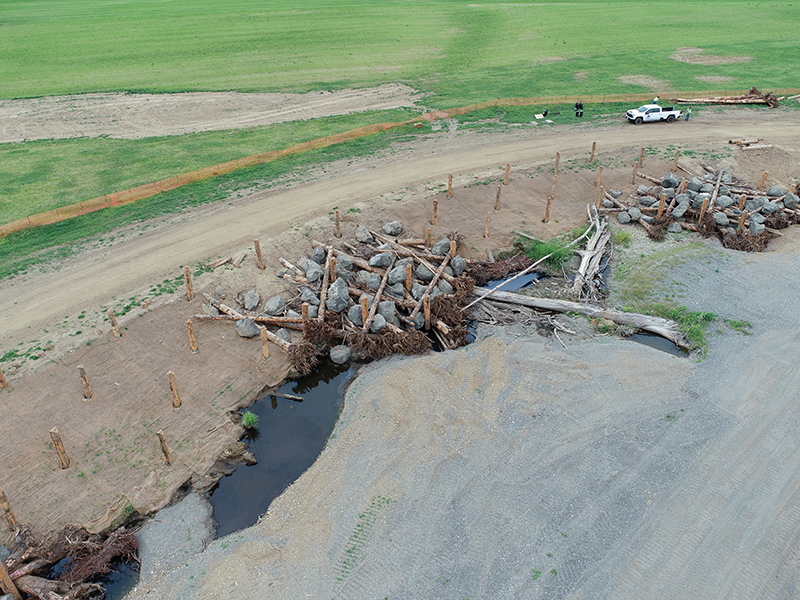

Satsop River Watershed Restoration Projects 2018-2024
The Satsop River Valley plays a crucial role in Grays Harbor and Mason Counties. This region is home to long-standing family farms, active timber operations, country homes, and recreational parks. It also serves as a key economic hub, with State Route 12 linking coastal towns to the Puget Sound area, and Keys Road leading to the Satsop Business Park, which employs more than 400 people. Additionally, the Satsop River offers essential habitat for salmon and steelhead.
In recent years, riverbank erosion and avulsions, where the river suddenly changes course during a flood, have resulted in the loss of tens of acres of valuable agricultural land. This also poses a risk to public infrastructure, including Keys Road. Meanwhile, populations of salmon, steelhead, and other fish and wildlife are struggling to cope with the long-term effects of habitat degradation. In response, Grays Harbor County, in collaboration with the Grays Harbor Conservation District and supported by the Chehalis River Basin Flood Authority, has created this Investment Plan. The plan was developed through a partnership between public agencies and private landowners to establish common goals and prioritize projects aimed at reducing erosion risks while improving habitat for fish and wildlife.
Primary Goals and Initiatives:
- Goal 1: Safeguard both public and private infrastructure, as well as agricultural lands, from erosion along riverbanks.
- Goal 2: Enhance floodplain connectivity to better distribute floodwaters across the area and restore side-channel and off-channel habitats for anadromous fish, resident fish, and wildlife.
- Goal 3: Mitigate flood risks and reduce hazards within the project area.
- Goal 4: Preserve and sustain recreational opportunities in the region.
Riverbend Ranch Habitat Restoration Project 2024
This was a restoration project put into place to restore habitat for fish and other aquatic species and help protect communities and landscapes from flood damage. The Chehalis basin is comprised of nearly 3,400 miles of streams and rivers that provide habitat for fish and amphibians. The ‘ASRP’ (Aquatic Species Restoration Plan) was initiated by the Thurston Conservation District in conjunction with representatives from the Quinalt Indian Tribe, Confederated Tribes of the Chehalis Reservation and the Washington Department of Fish and Wildlife. These groups worked in accordance with the Washington State Department of Ecology’s office of the Chehalis basin, state agencies and local governments to implement the restoration strategy.
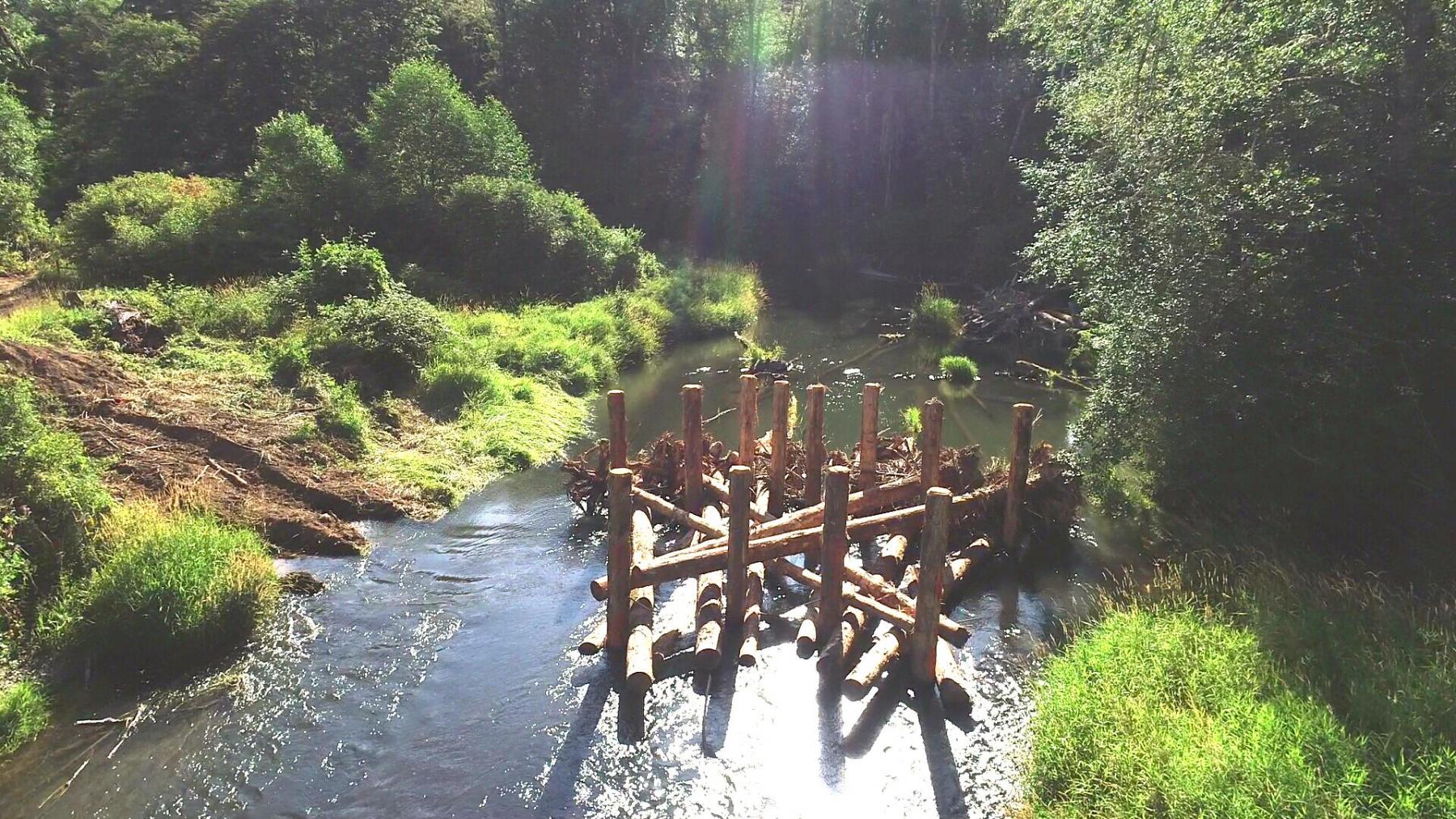
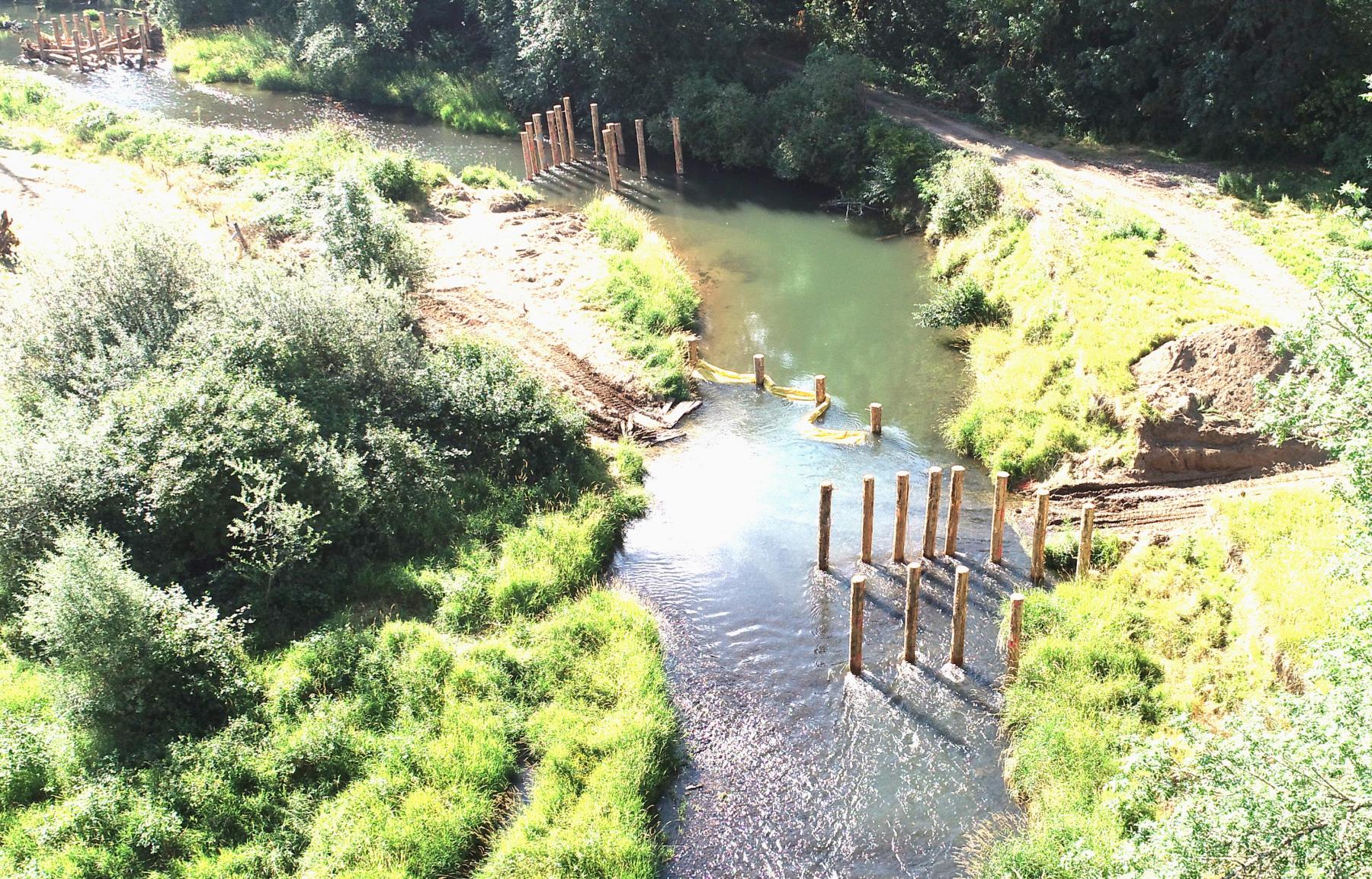
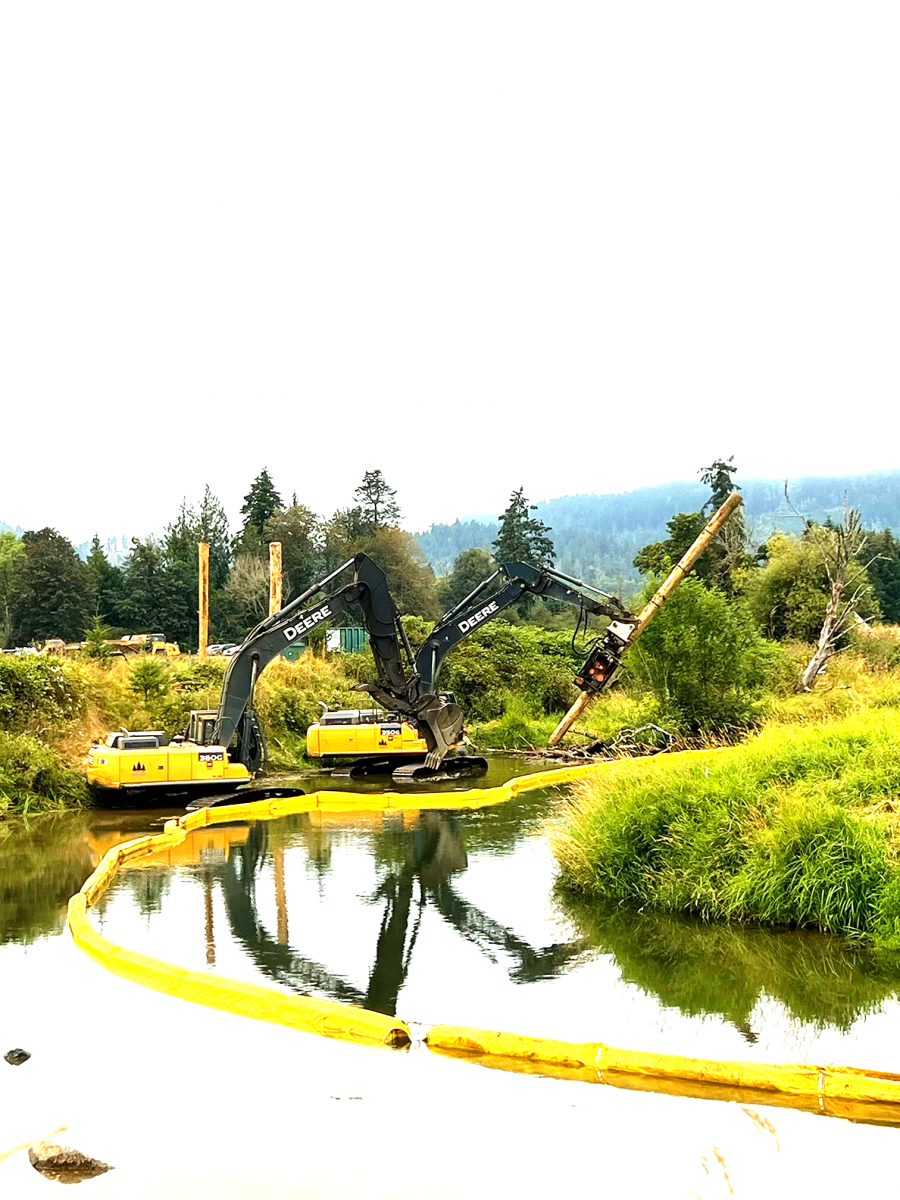
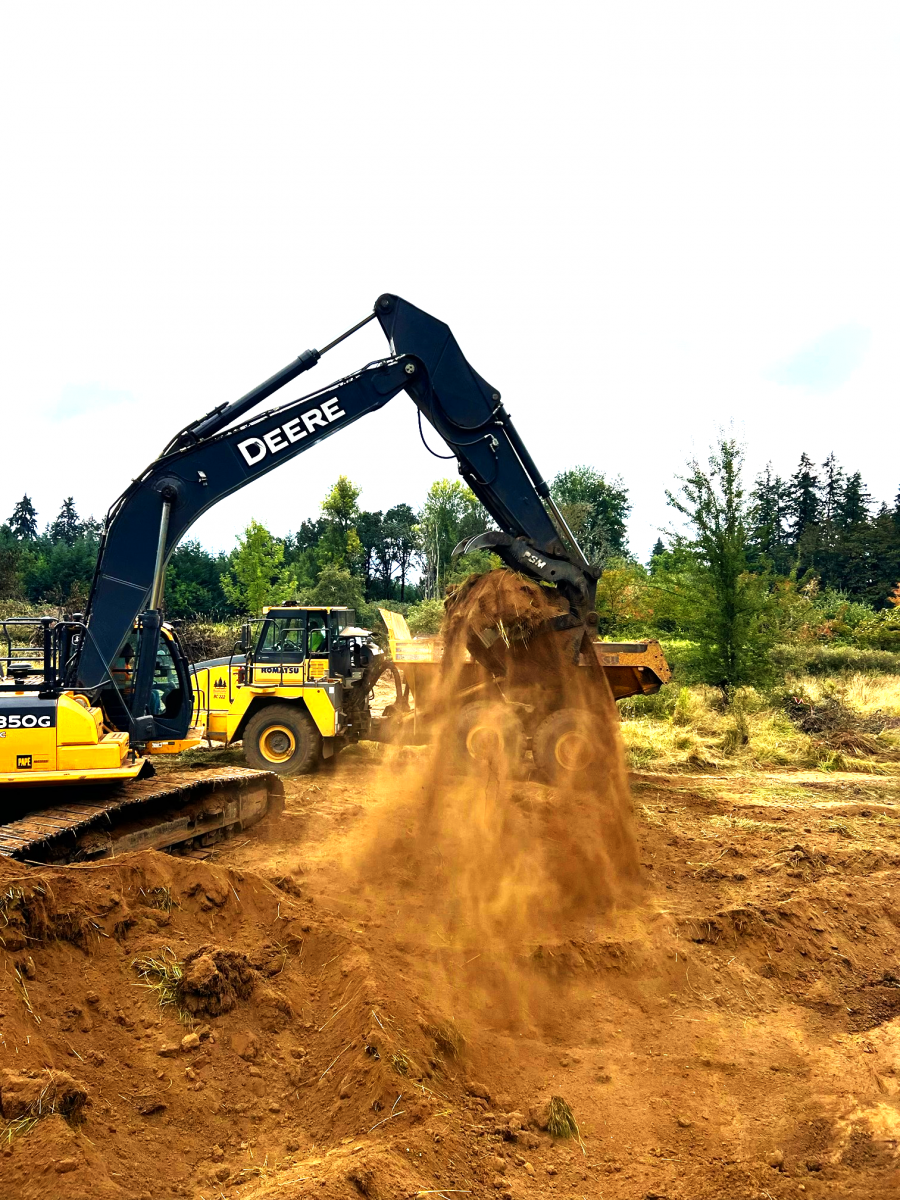
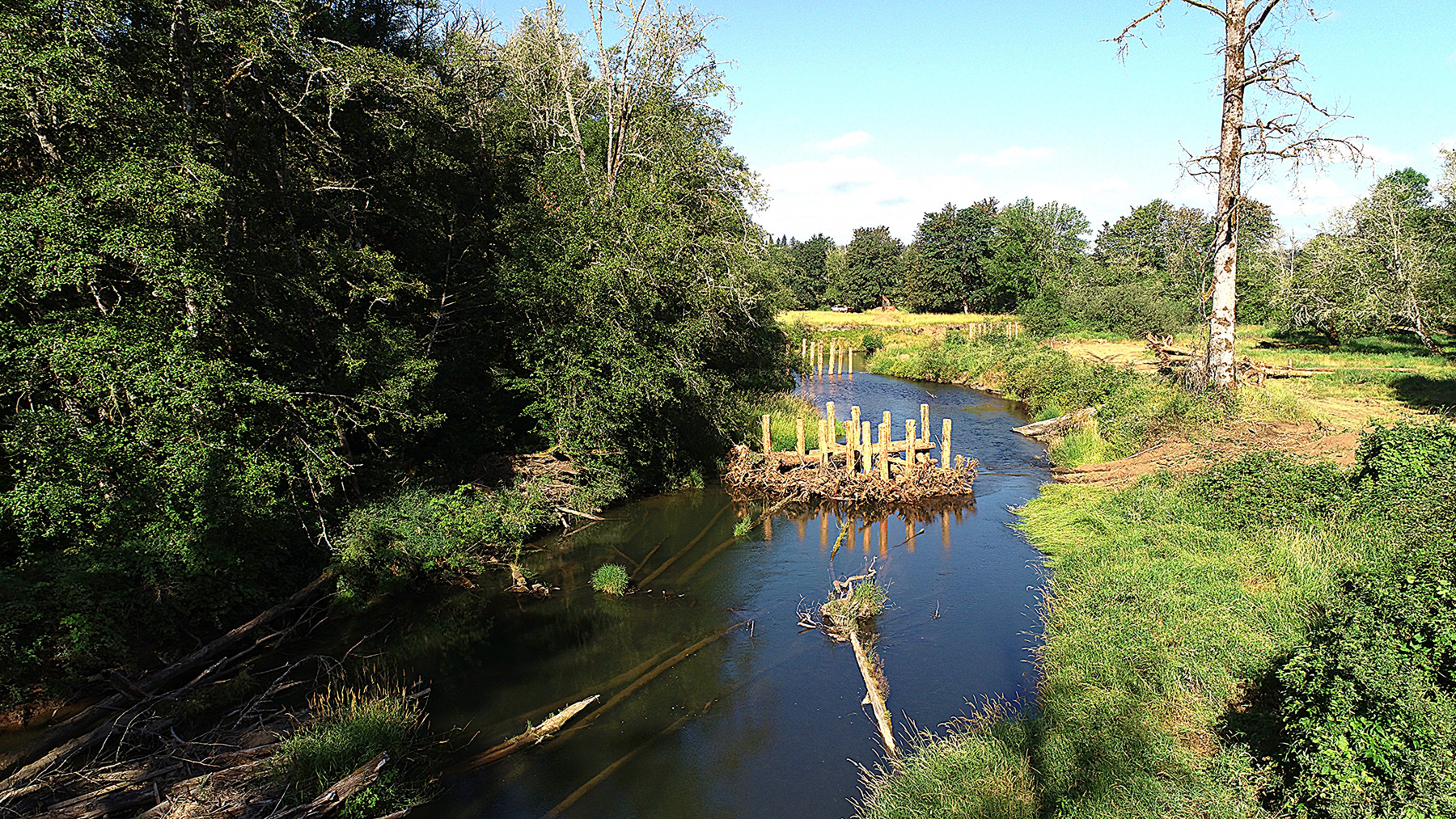
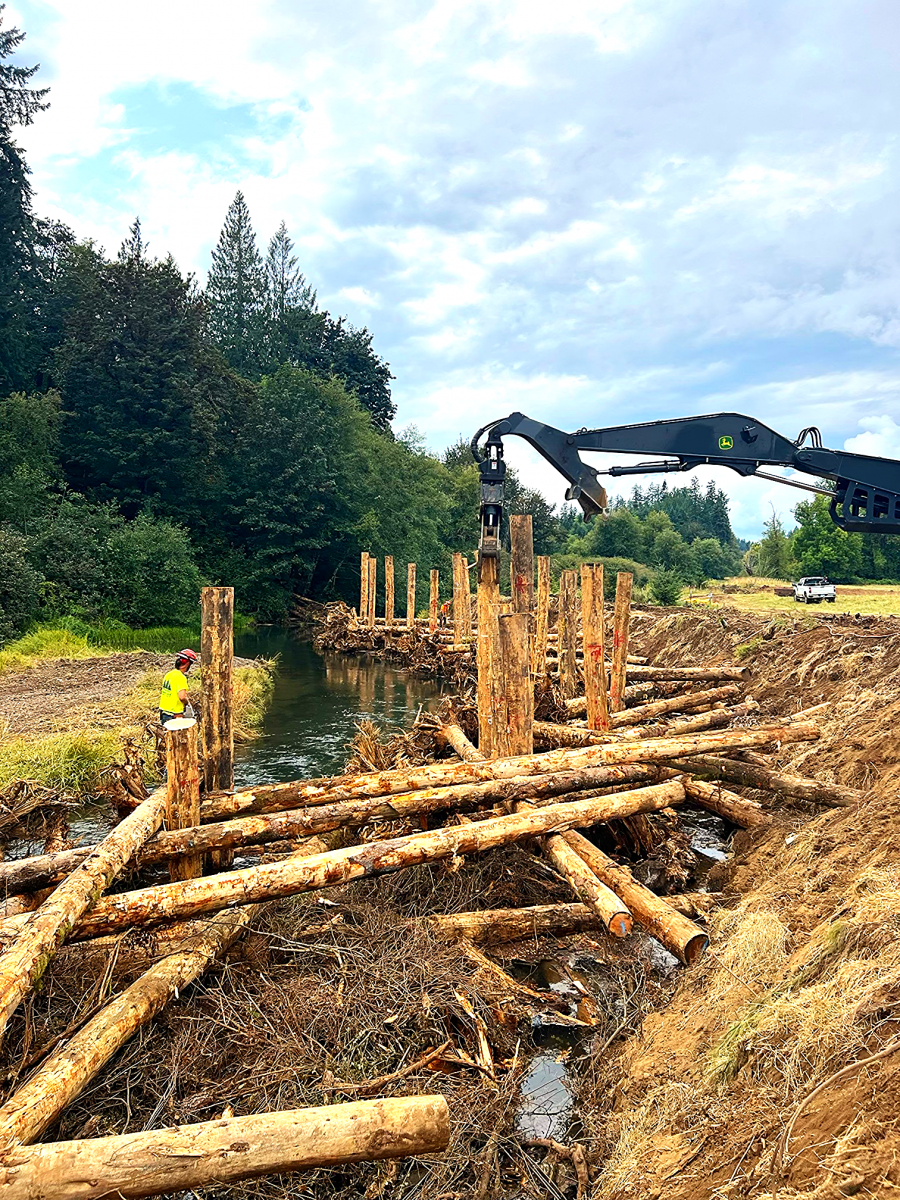
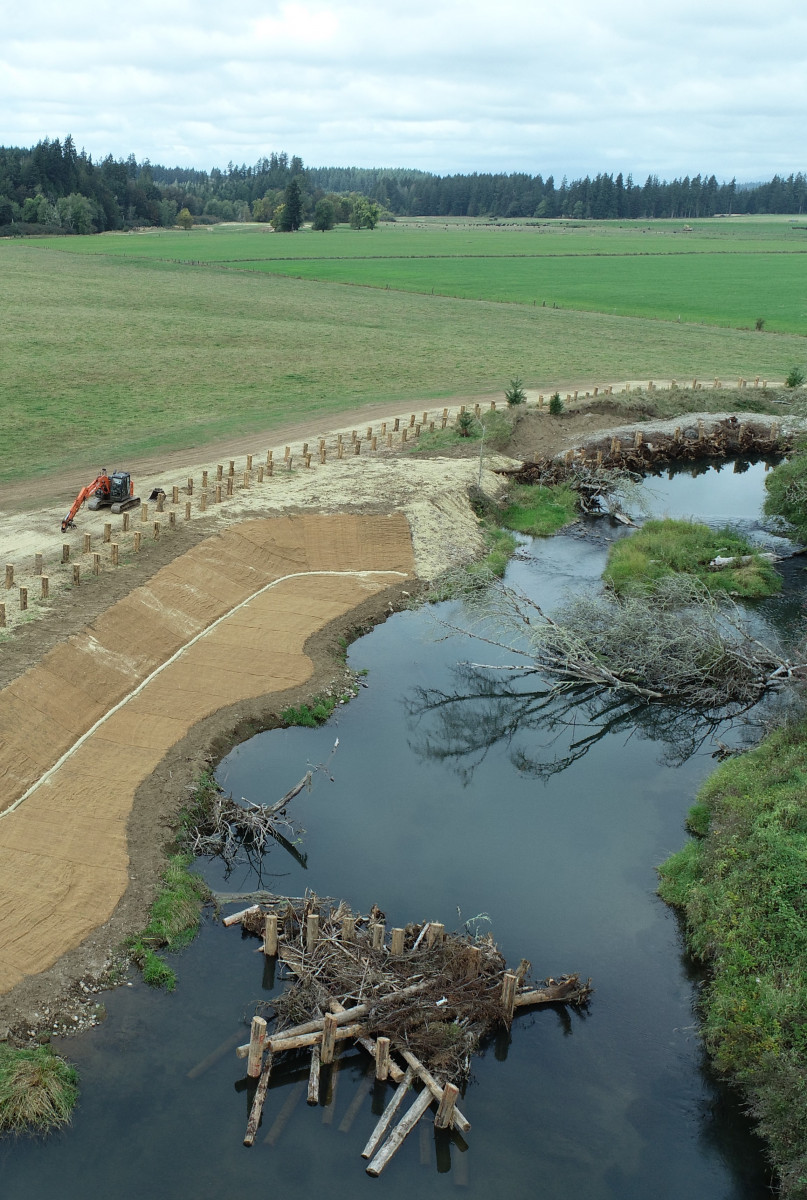
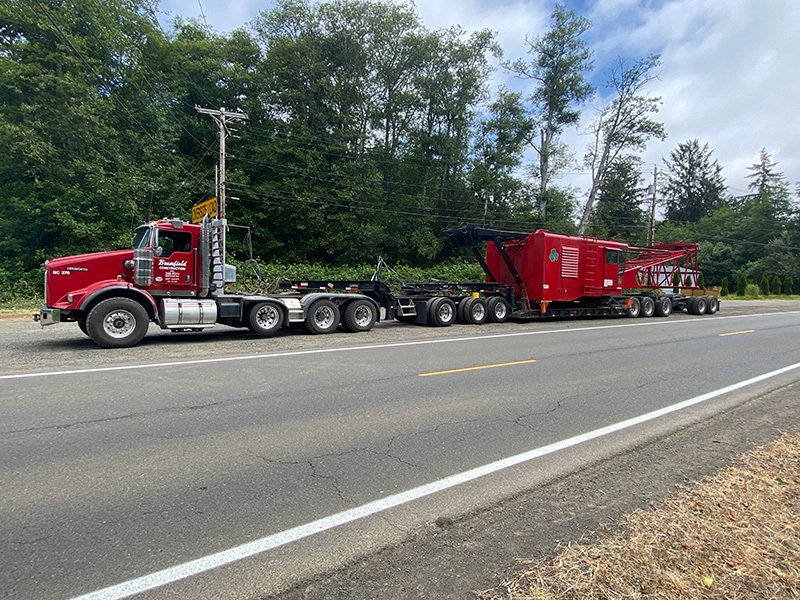
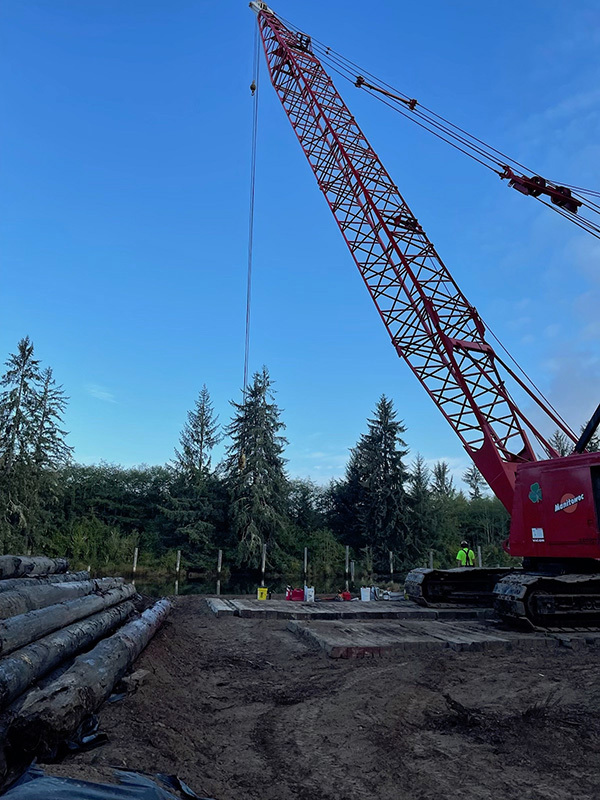
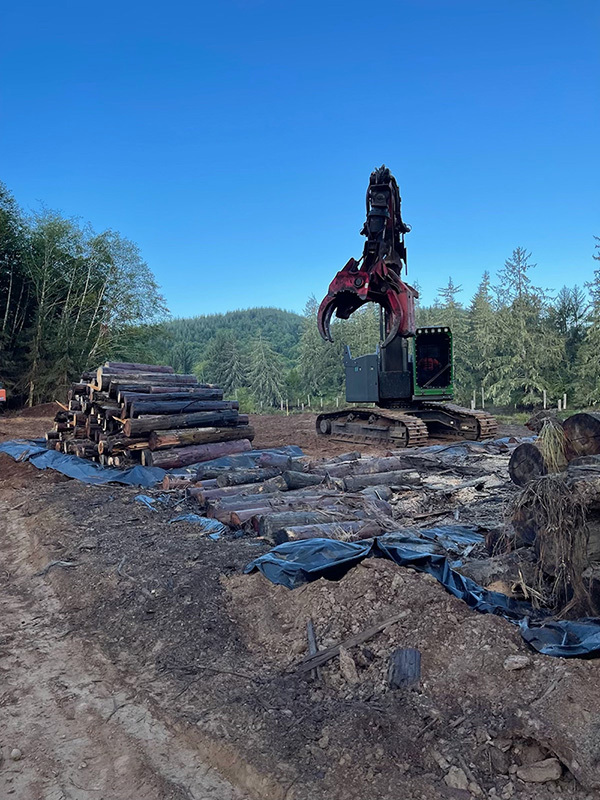
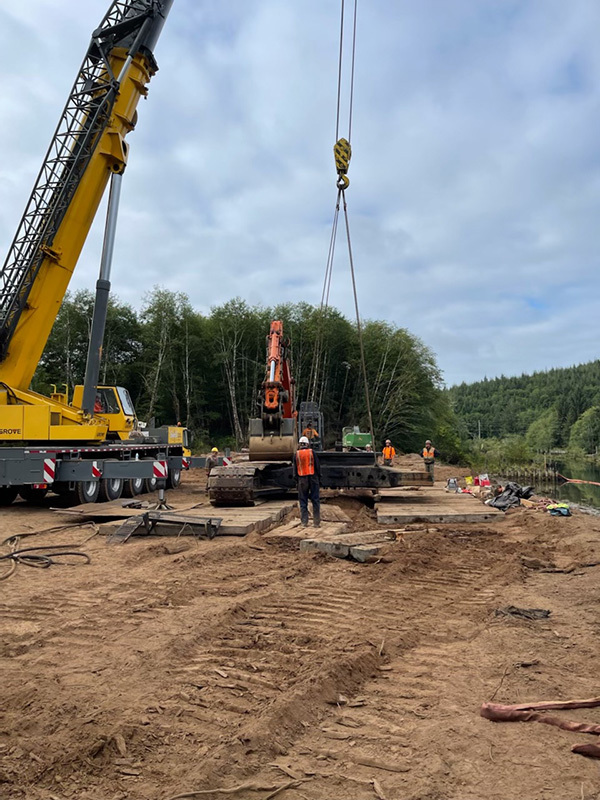
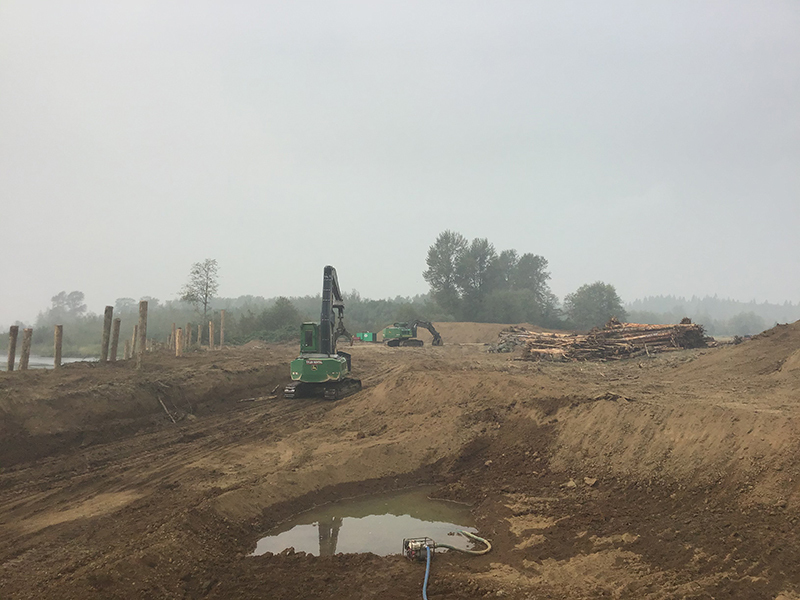
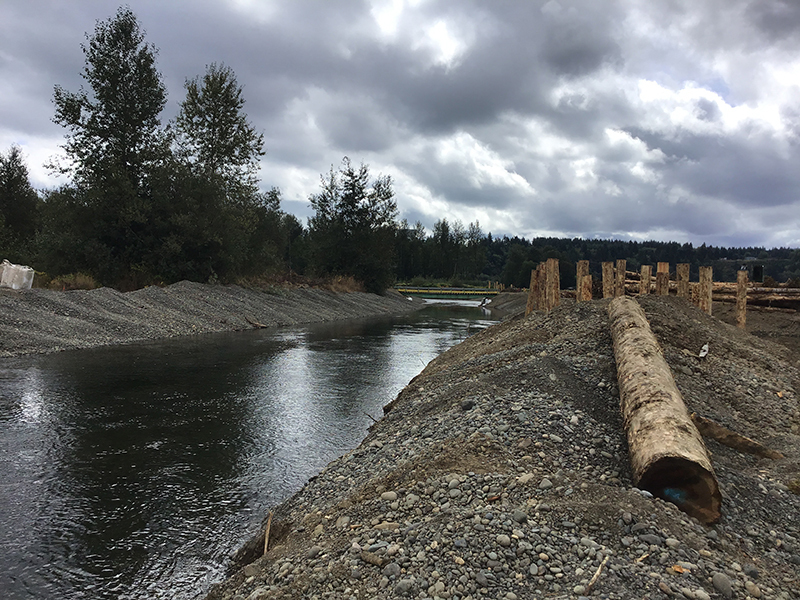
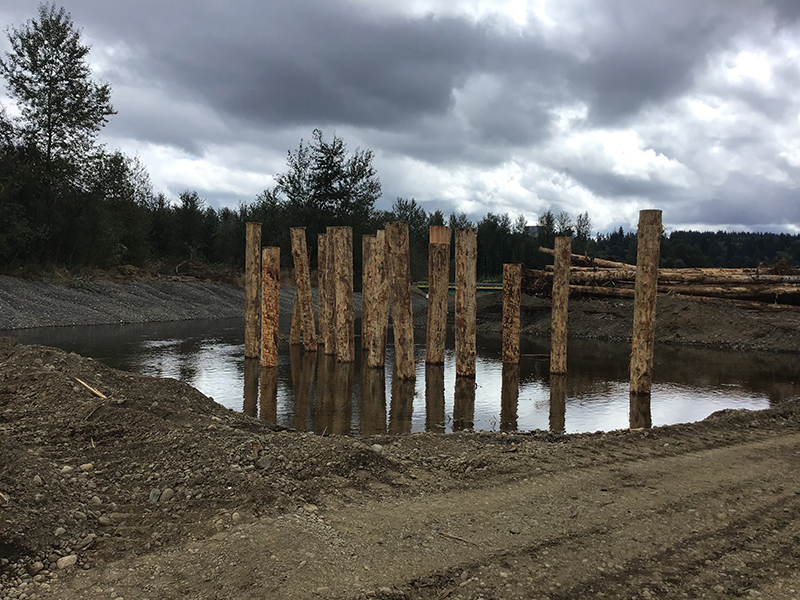
The Riverbend Ranch Habitat project consisted of 2.5 miles of river restoration. One of these miles was made accessible by correcting a fish passage barrier. During the duration of the project, many unknown challenges were faced. The dense ground and massive boulders made for harsh pile driving conditions. Brumfield Construction Inc. was able to navigate some of these unforeseen obstacles with the varying project teams. Along with the conditions, this project called for a 30 day in water work window. With the obstacles that were faced, Brumfield Construction was still able to complete logging procurement (roughly 1600 logs), install seventy-six large log jams, installed 800 driven pilings and moved 15,000 cubic yards of channel excavation. Due to the great cooperation from all project teams, this two-year project was completed in a single season and under budget.
Benefits of the project include reconnecting the flood plain, restoring natural river processes, lowering stream temperatures and diversifying the habitat. The work that was completed on this project will endure slowing of the river, erosion control and providing safe spaces for fish and other aquatic species during a flood, particularly the spring Chinook Salmon.


Hoquiam Middle Fork Tidal Restoration Project
Finish Date: October 30, 2021
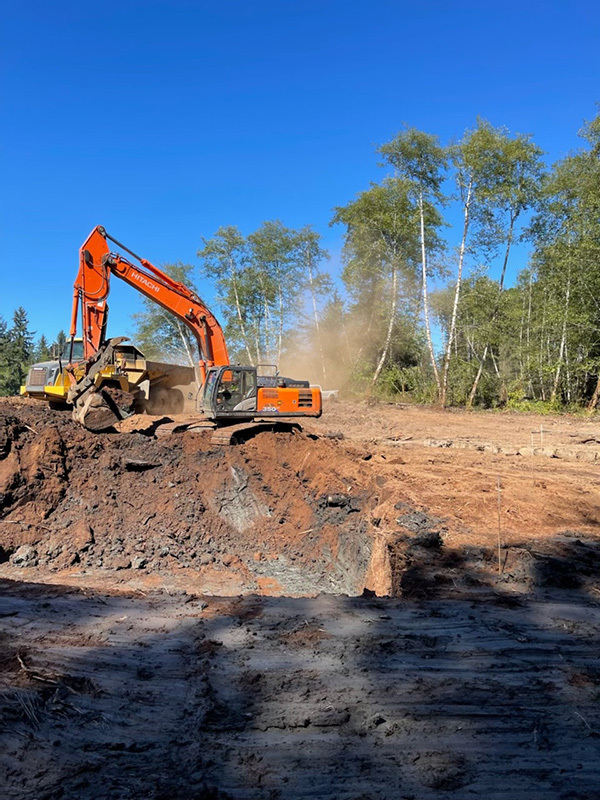
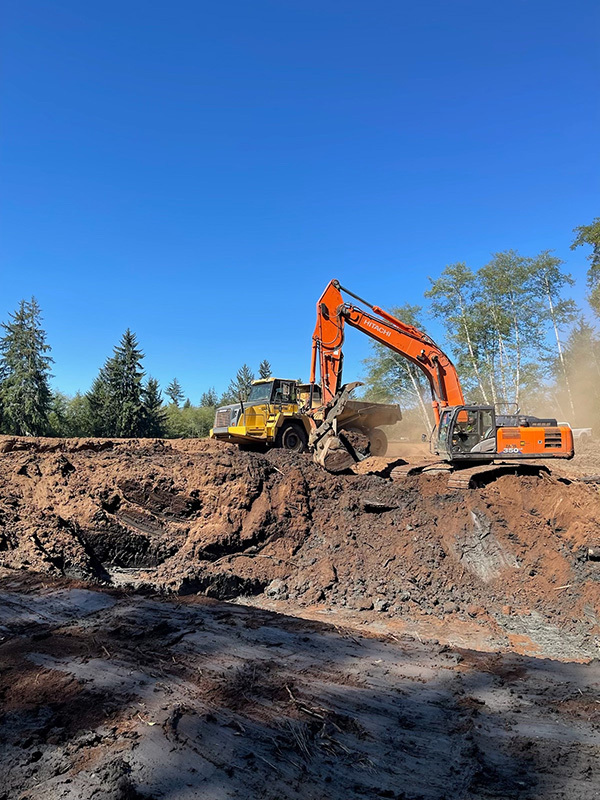
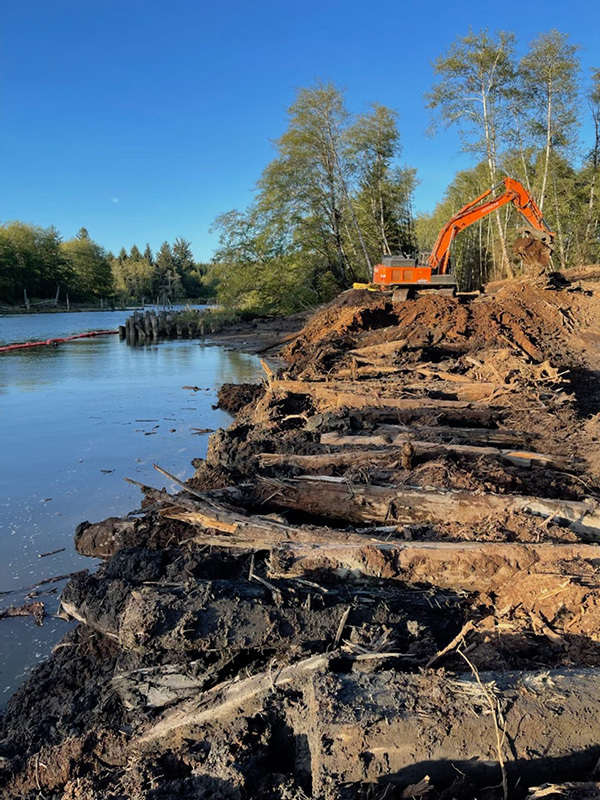
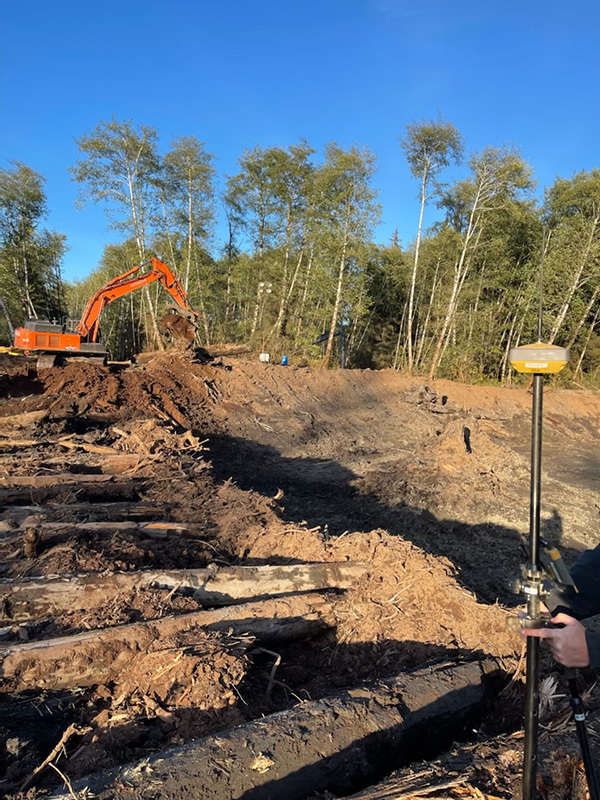
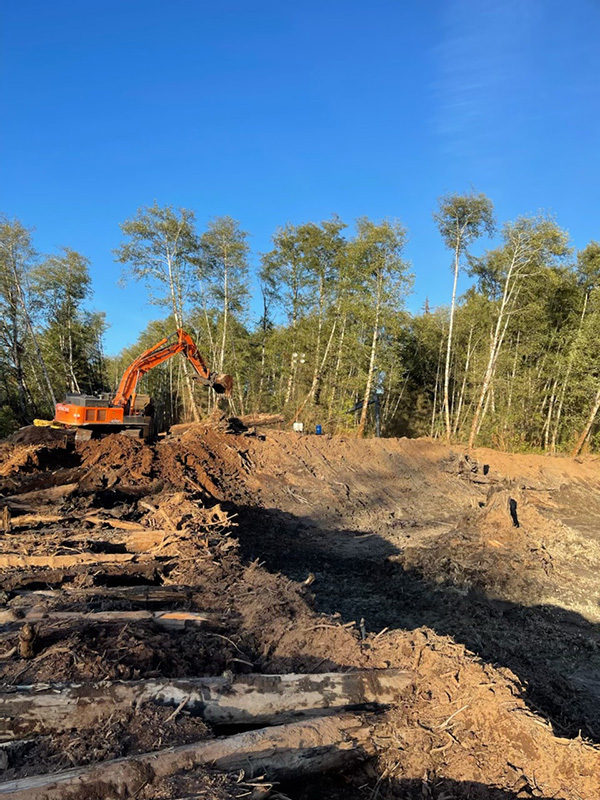
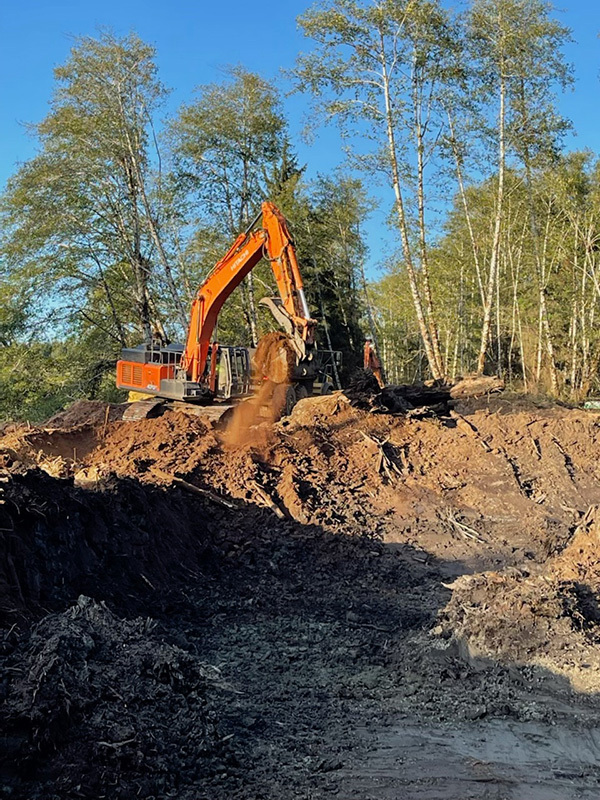
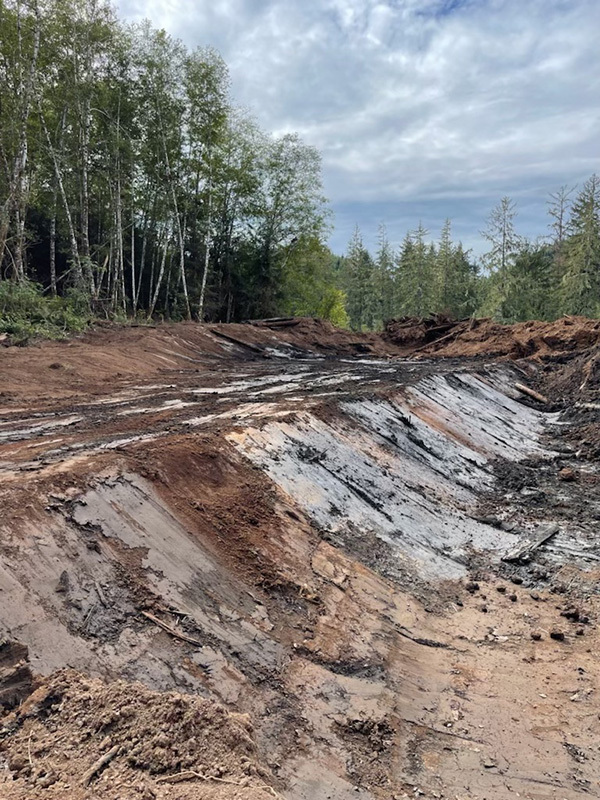
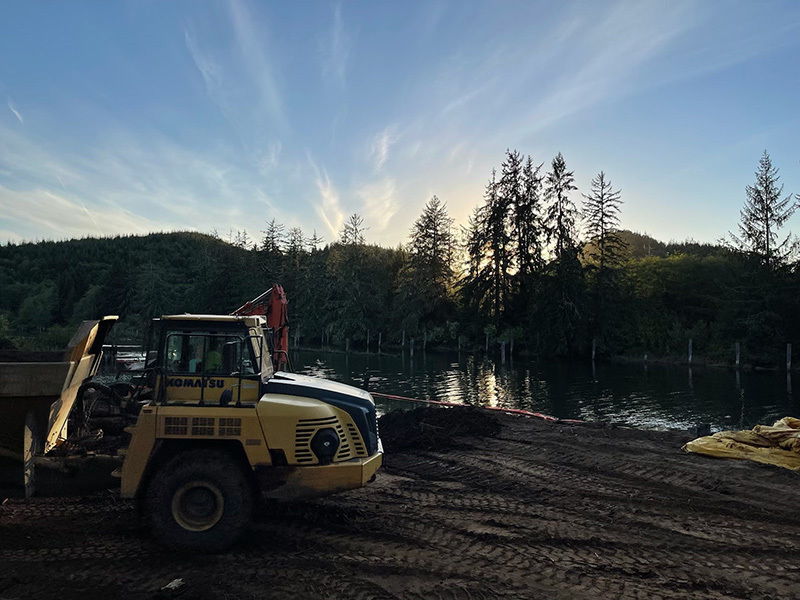
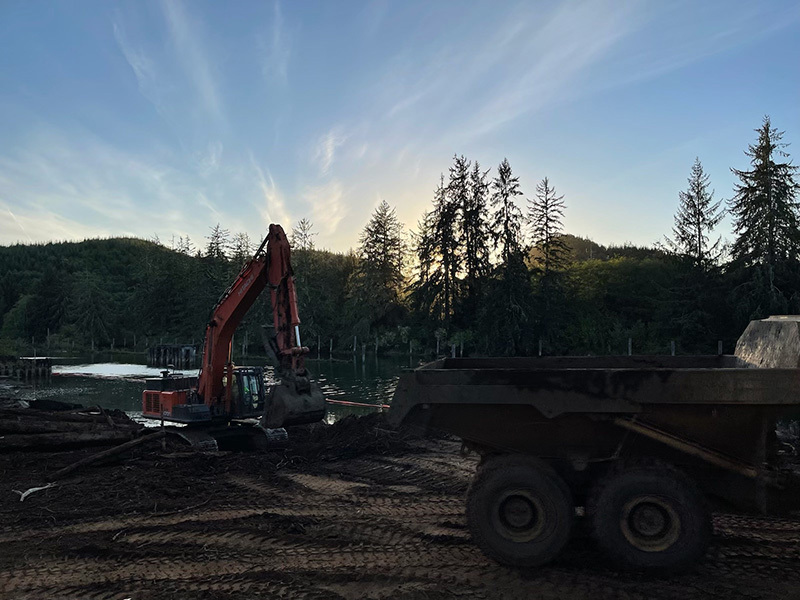
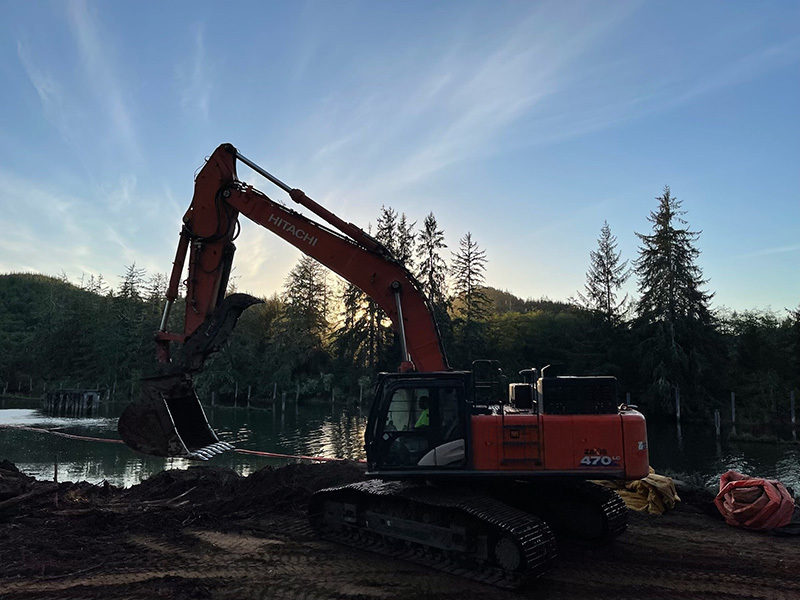
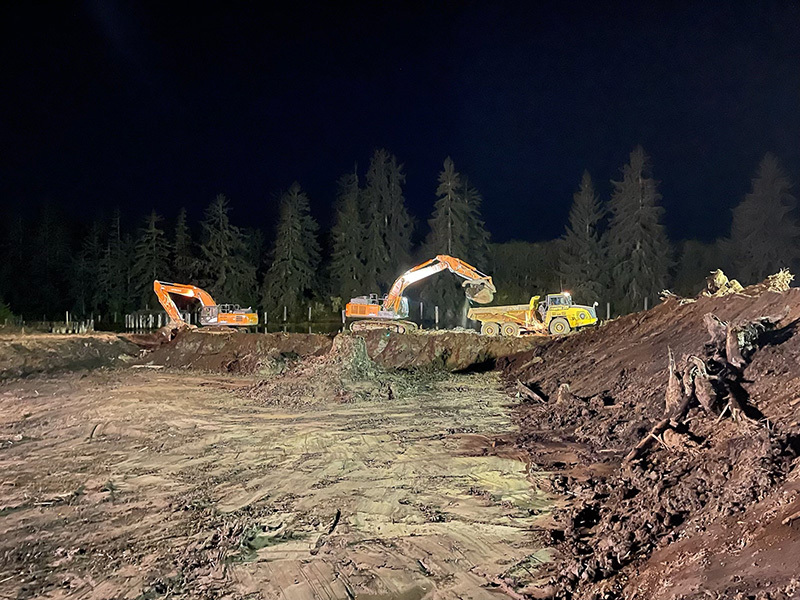
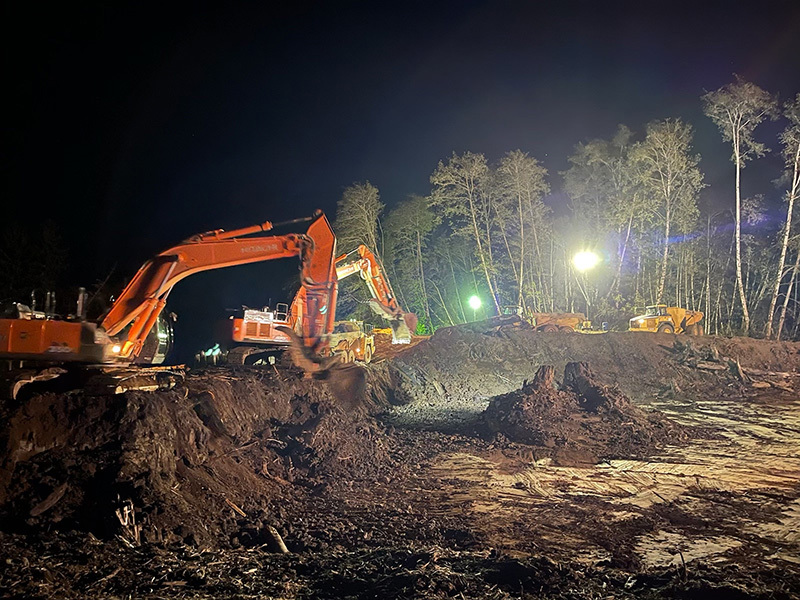
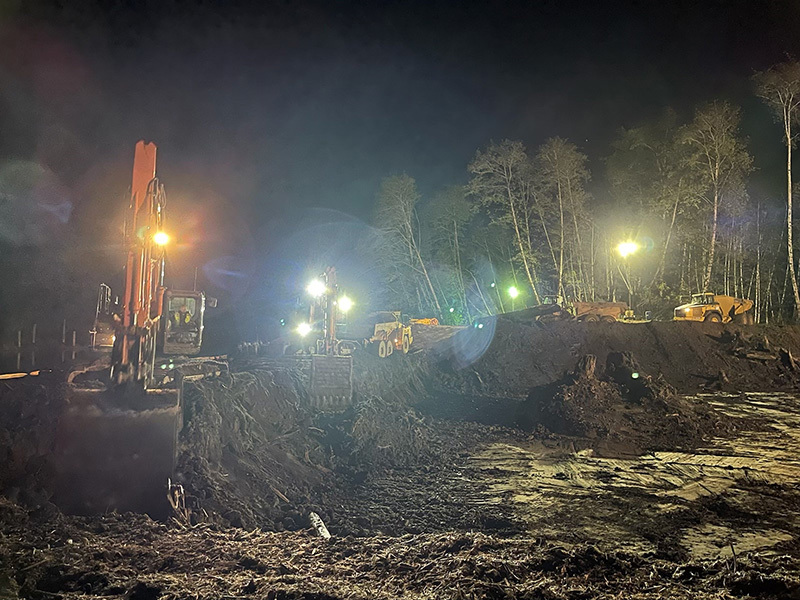
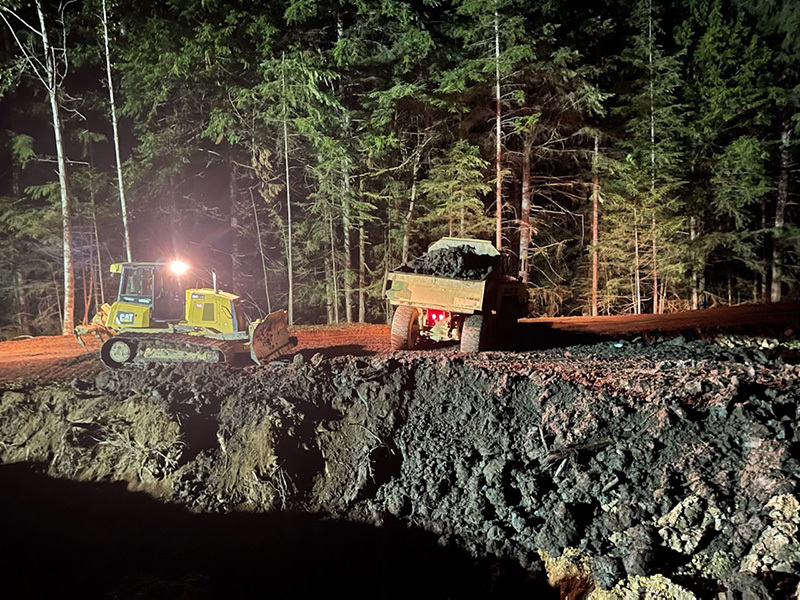
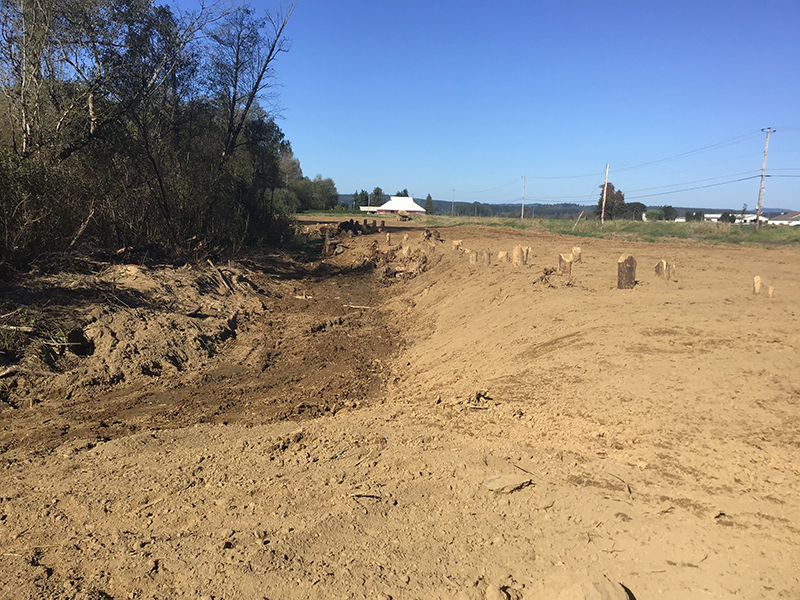
Brumfield Construction had to remove over 1000 timber pilings, while also removing and grinding timber along with other various grubbing and vegetation to construct an access road and staging areas for equipment and materials. Excavation of tidal channel and dumpsites. There was over 40,000 CY of material excavated below the OHWM and hauled to various dumpsites to create tidal access to wetlands in various locations within the project.
The middle for Hoquiam River tidal restoration project primarily benefits the fish populations, particularly salmon and steelhead. By restoring access to crucial tidal wetland habitat, increasing their rearing areas and improving their survival rates. Additionally, it contributes to overall ecosystem health by restoring natural tidal flows, and providing wildlife refuge within the restored wetlands.



Keys Road – Flood Protection Project Phase 1
Finished Date: October 26, 2020
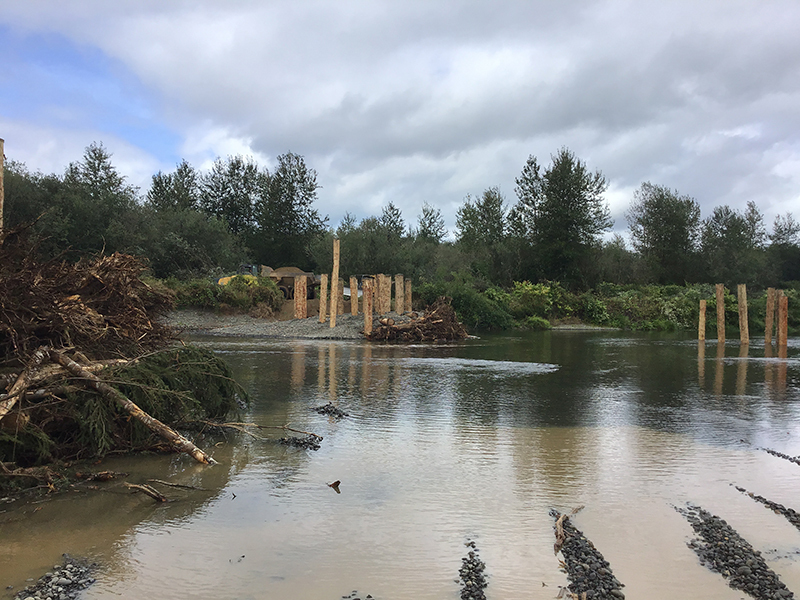
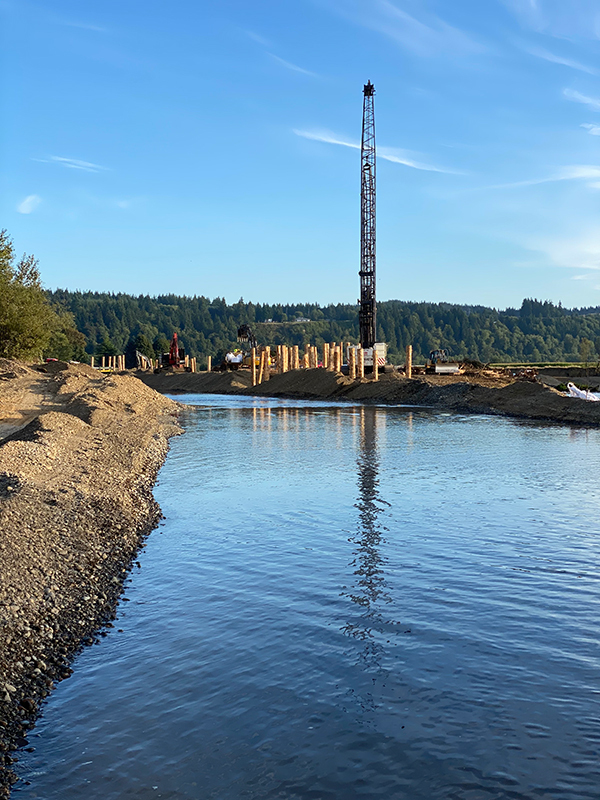
The project elements were Driven wood pilings, 36 engineered log jams, erosion and sediment control, access road and staging area development, channel excavation, coffer dam construction, stream bypass & isolation, fish exclusion and dewatering. Seeding was coordinated in timing and executed by subcontractor. Due to this project being on private land, constant communication between the project teams was essential in executing the project.
Benefits of the project were focusing on enhancing various aspects of the eco system. Boosting the presence of large wood with the engineered log jams, stabilizing banks and flood plains, shading to reduce stream temperatures, enhancing connectivity in flood plain and side channel habitats, retaining gravel, and establishing/maintain deep pool habitats. Restoration reseeding was utilized to reintroduce vegetation, promoting soil stability and preventing erosion.
 Skip to content